
Thyroid surgery
Thyroid Surgery in Istanbul: What Should You Know Before Deciding?
Unimed Editorial Team · · 3 min read
Understand why thyroid surgery may be considered, partial versus total removal, alternatives, risks and follow-up questions before arranging care in Istanbul.
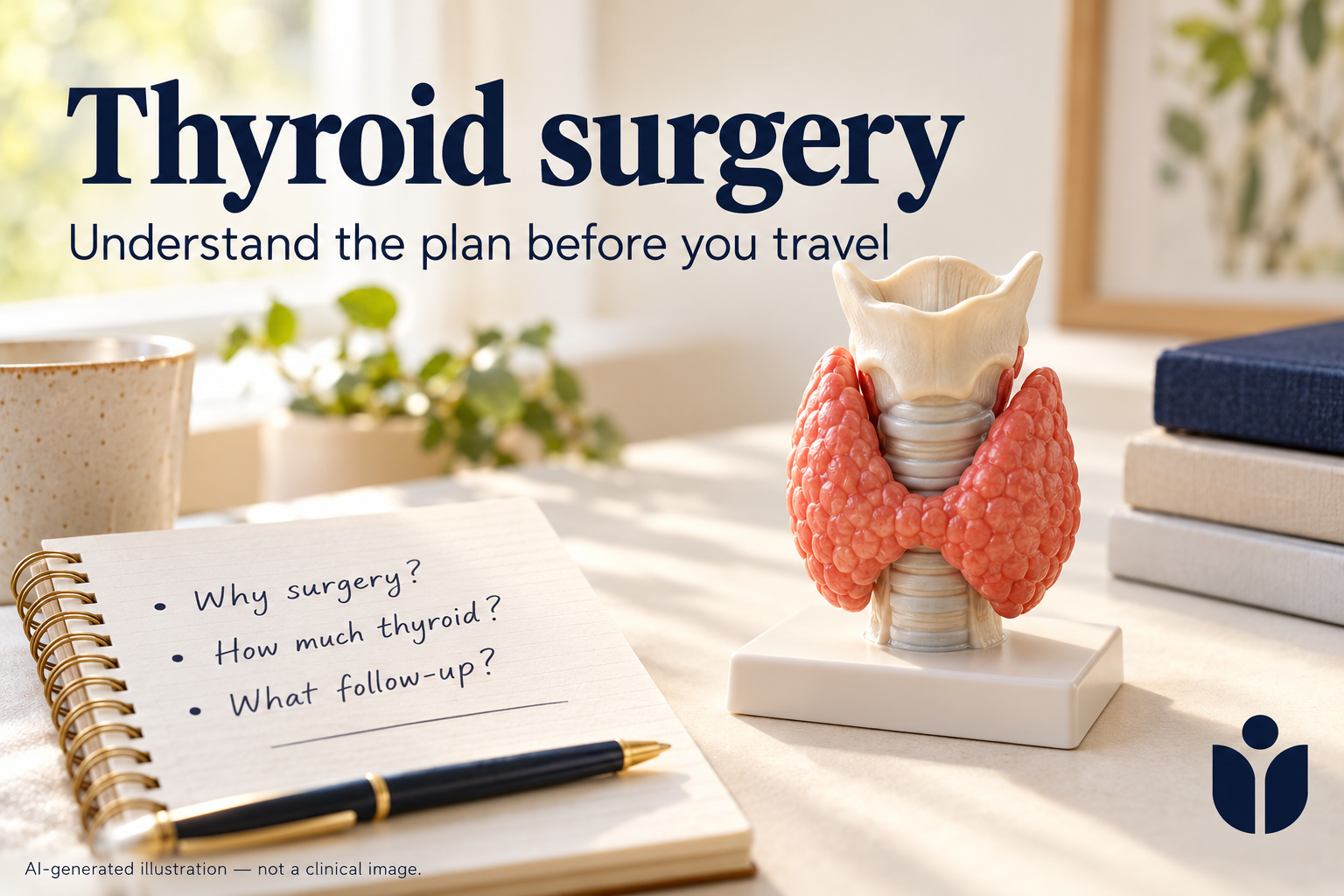
Why might a specialist discuss an operation?
Possible reasons include cancer or a suspicious nodule, an enlarged gland causing pressure symptoms, or an overactive thyroid. A referral is an opportunity to compare options, not an obligation to proceed.
Ask your clinician to explain the diagnosis, what remains uncertain and what surgery is intended to achieve. Bring available ultrasound, biopsy and blood-test reports rather than relying on the word nodule alone.
Sources: [1]
Does every thyroid problem need surgery?
No. For an overactive thyroid, medicines and radioactive iodine are other established approaches. An endocrinologist can help compare them with surgery. Suitability depends on the condition and individual circumstances; these are not interchangeable treatments for every thyroid diagnosis.
Ask what would happen without an operation, whether observation is relevant to your case, and what findings would change the recommendation. Do not stop thyroid medicines or alter doses without your prescribing team.
Sources: [2]
Will part or all of the thyroid be removed?
A lobectomy removes one half; a total thyroidectomy removes the whole gland. After total removal, lifelong thyroid-hormone replacement is needed. Some people also need replacement after a lobectomy.
Ask for the exact operation name and why that extent is proposed. If cancer is suspected, ask how the final tissue results could affect further treatment. A larger operation is not automatically the right choice for every person.
Sources: [1]
Which risks deserve a clear conversation?
Discuss bleeding, infection, voice changes from nerve injury and low calcium related to the nearby parathyroid glands. The risk profile depends on the operation. Voice or calcium problems can sometimes persist.
Tell the surgeon if your voice is important to your work or already sounds different. Ask about their experience with the proposed operation, how complications are managed and who provides urgent advice after discharge. No generic online percentage can substitute for your own risk discussion.
What should the recovery plan include?
Sore throat, neck discomfort or stiffness can occur after thyroid surgery. Ask for written instructions on wound care, medicines, activity and review appointments. Returning to work and flying home are separate decisions requiring individual advice.
Rapid neck swelling with tightness or difficulty breathing or swallowing is an emergency: seek immediate medical attention. Tingling around the mouth or fingers, or muscle spasms, can indicate low calcium and should be reported promptly to the surgical team. Do not wait for a travel coordinator to assess these symptoms.
Confirm who will review the pathology report and arrange any thyroid-function or calcium tests your team recommends. If hormone replacement is prescribed, clarify the prescription and ongoing monitoring before returning home.
Sources: [3]
How can you prepare for an Istanbul consultation?
Op. Dr. Ercan Yalçın's supplied profile lists thyroid surgery: https://www.unimed.clinic/doctors/op-dr-ercan-yalcin. This is a consultation connection, not a claim that he reviewed this article or has accepted a particular case.
Before booking travel, confirm the assessing specialist, proposed hospital, written estimate and follow-up arrangements with your home clinician. Ask how reports will be transferred securely and what happens if the assessment changes the plan.
For non-emergency coordination, contact Unimed on WhatsApp +90 545 234 63 74: https://wa.me/905452346374. Do not send sensitive records in public comments. This guide by Unimed Editorial Team is general education, not individual medical advice.
Frequently asked questions
Does a referral mean I have thyroid cancer?
No. Surgery may be discussed for several thyroid conditions. Ask what your tests actually show and what is still uncertain.
Can I avoid hormone tablets by choosing a smaller operation?
A lobectomy does not guarantee that tablets will be unnecessary. The operation should be chosen for your diagnosis, with follow-up hormone testing as advised.
Can I book a fixed return flight before assessment?
Ask the treating team about your expected recovery and follow-up first. A general timetable is not medical clearance to fly.
Is this guide approved by the named surgeon?
No clinician review is claimed. Unimed Editorial Team checked the listed educational sources; your own clinician must assess your situation.
References
General education, not an individual diagnosis or treatment recommendation. Suitability and treatment decisions require assessment by the treating clinician.
Have reports for this procedure?
Send them for a confidential specialist review. A coordinator confirms what is missing and when the doctor's view will be ready.