
pH monitoring / impedance
Reflux pH and Impedance Testing in Istanbul: What Can It Tell You?
Unimed Editorial Team · · 3 min read
Learn what reflux pH and impedance testing measures, medication planning, risks and questions before an Istanbul assessment.
The short version
Reflux testing is an investigation, not a treatment. It can help clarify whether reflux is contributing to persistent symptoms before you make further treatment decisions. The right test depends on what has already been established—not simply on how uncomfortable the symptoms feel.
Sources: [1]
What is the difference between pH and impedance?
pH monitoring records acidity in the food pipe. Adding impedance detects the movement of liquid and gas, including reflux that is not strongly acidic. The recording can be compared with the symptoms you report. A thin nasal catheter usually stays connected to a portable recorder for approximately 24 hours.
Sources: [2]
Who might benefit from testing?
A specialist may consider monitoring when the diagnosis remains uncertain, symptoms persist despite treatment, or an invasive reflux treatment is being considered. Symptoms alone, improvement with acid suppression, or a non-definitive endoscopy do not always establish reflux disease.
Sources: [3]
Should I stop my reflux medicine?
Not without instructions. When reflux disease is unproven, testing may be arranged off proton pump inhibitors (PPIs). For established disease with persistent symptoms despite optimised therapy, impedance-pH testing may instead be performed on PPIs. Ask your prescribing clinician and testing unit for one written, individualised medication plan.
Sources: [1]
What would the recording day involve?
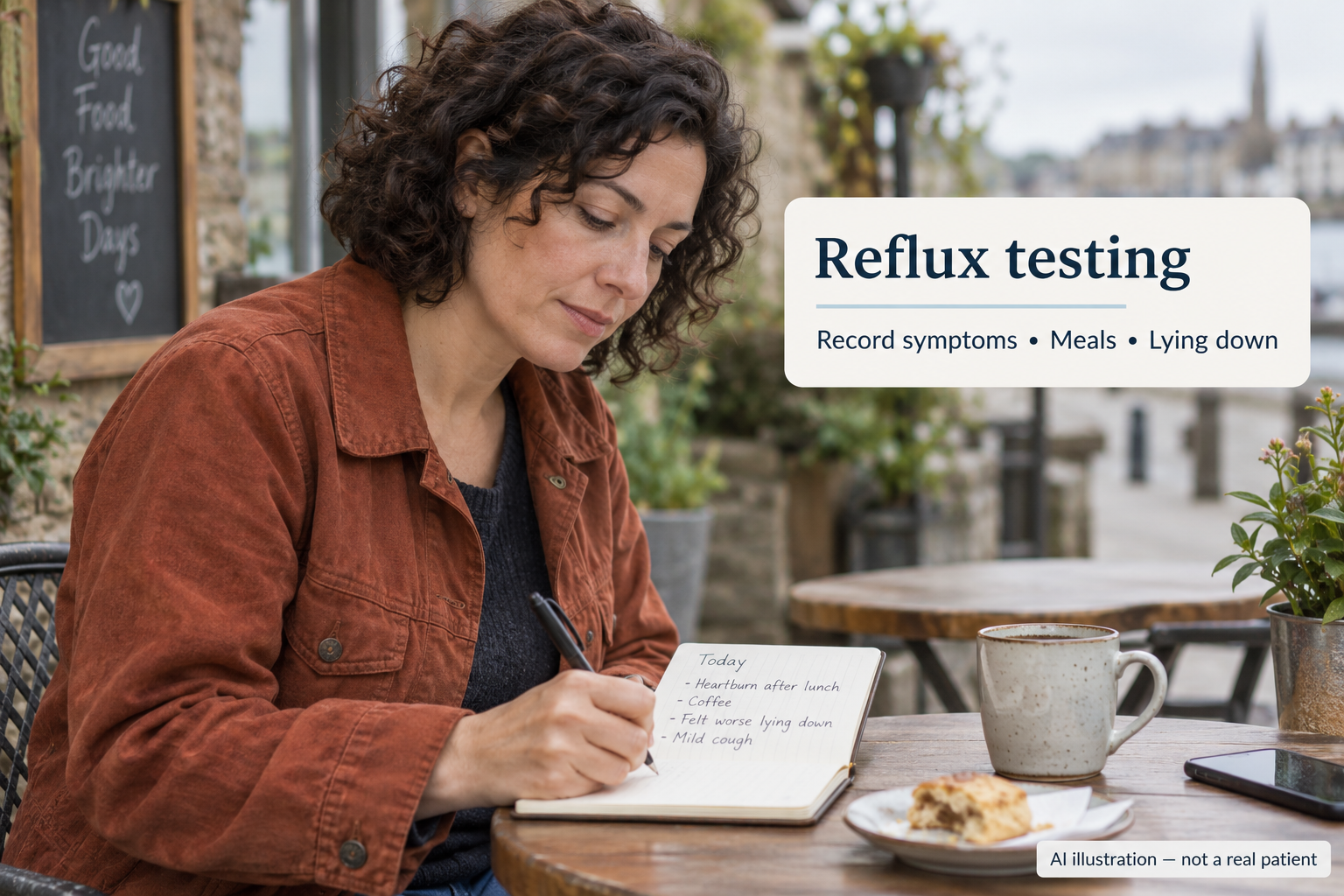
You may be asked to log symptoms, meals and bedtime using the recorder and a diary. Follow the unit's instructions for daily activities, catheter removal and returning the equipment. Accurate entries help the team interpret the recording.
Before your appointment, confirm fasting requirements, which medicines to take, how to protect the recorder, and whom to call if the catheter moves or becomes difficult to tolerate.
Sources: [4]
What are the downsides and alternatives?
Nasal and throat discomfort can occur with a catheter. Wireless pH monitoring avoids a nasal tube and can record for several days, but requires capsule placement during endoscopy and can cause chest discomfort. It answers a different testing question from combined impedance-pH monitoring.
A small nosebleed is another catheter-related risk. Discuss your personal risks before consent; do not assume any investigation is risk-free. Seek urgent local medical care if you become seriously unwell, rather than waiting for a coordination reply.
What happens after the results?
The clinician considers acid exposure, symptom timing and other findings together. A symptom association alone is not a diagnosis or a guarantee that a procedure will help. Findings may support reflux-directed care or further assessment for another explanation. Manometry evaluates pressure and movement; it is not the same as measuring reflux.
Sources: [3]
How should I plan an assessment in Istanbul?
Before booking travel to Turkey, ask for confirmation of the exact test, the responsible specialist and facility, preparation, equipment-return arrangements and the results appointment. Request a plan for follow-up with your clinician at home.
Prepare a medication list and a summary of previous investigations. Ask the coordination team for an appropriate secure route before sending medical records.
The Unimed profile of Prof. Dr. Barış Yılmaz provides the relevant doctor link. This article does not claim his review, confirm an appointment or guarantee that a particular device is available.
Frequently asked questions
Is this a reflux operation?
No. It is a diagnostic recording used to inform a subsequent clinical discussion.
Will one result settle every symptom?
No. Ask what the result explains, what it does not explain, and whether any further assessment is needed.
Can I arrange a consultation first?
Ask about coordination through WhatsApp: +90 545 234 63 74. Do not send sensitive documents in an initial enquiry. This is not an emergency service.
References
General education, not an individual diagnosis or treatment recommendation. Suitability and treatment decisions require assessment by the treating clinician.
Have reports for this procedure?
Send them for a confidential specialist review. A coordinator confirms what is missing and when the doctor's view will be ready.