
Joint replacement surgery
Joint Replacement in Istanbul: Is It the Right Next Step?
Unimed Editorial Team · · 3 min read
Questions to ask about hip or knee replacement, non-surgical options, personal risks and rehabilitation before arranging an assessment in Istanbul.
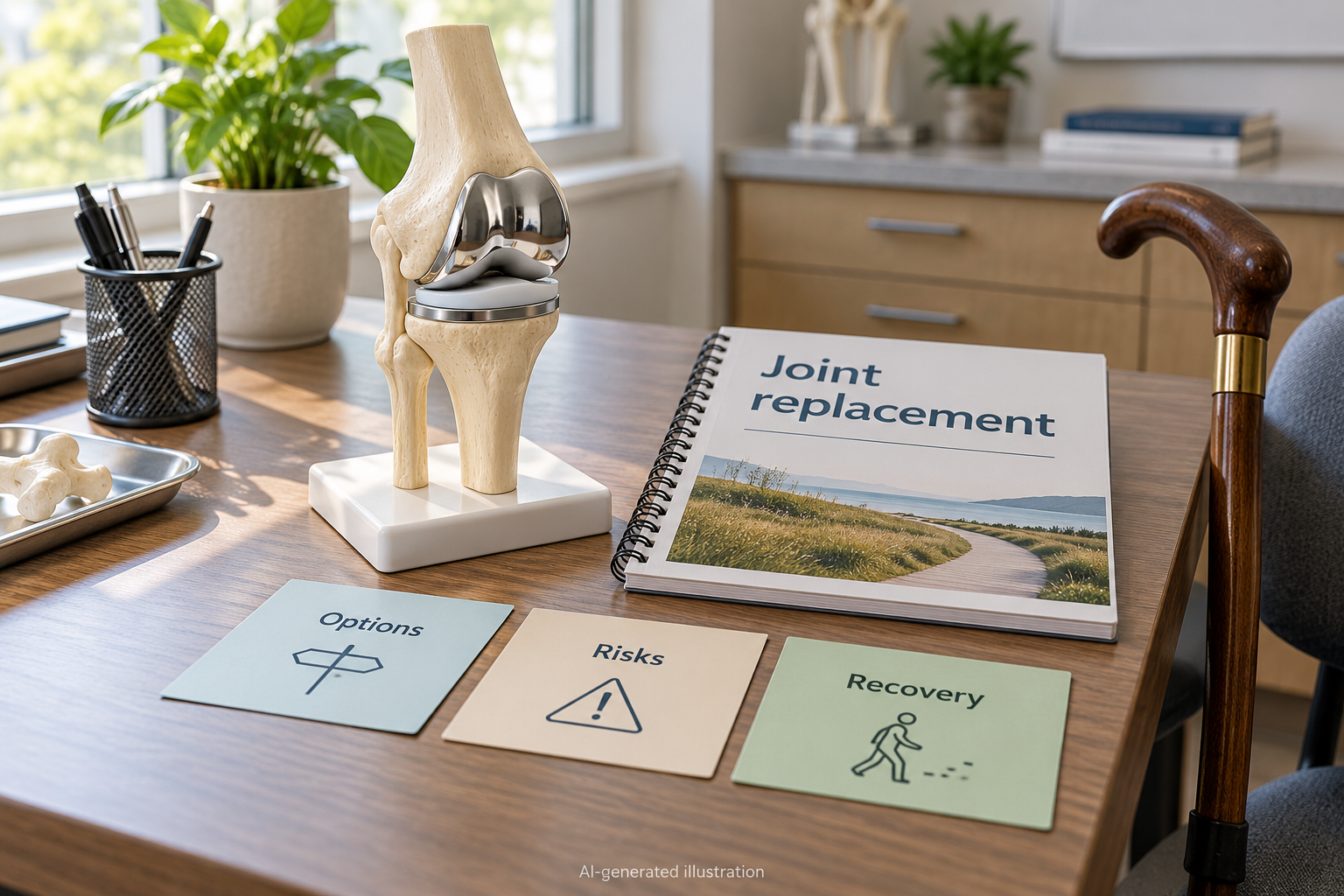
When might joint replacement be considered?
Joint replacement replaces damaged joint surfaces with artificial components. Hip and knee replacements are common examples, but the operation must match the joint and the diagnosis.
An orthopaedic assessment may consider replacement when pain and loss of function persist despite appropriate medicines, physiotherapy or changes to activity. A consultation is not a commitment to surgery.
Sources: [1]
What should you ask before choosing an operation?
Describe what matters in daily life: walking to the shops, climbing stairs or sleeping comfortably. Ask which goals are realistic and whether further non-surgical care is appropriate.
Ask the surgeon to explain the proposed operation, their experience with it, and why a particular approach or implant is being discussed. A device name or the word robotic is not, by itself, a reason to choose treatment.
Sources: [2]
Which risks need an individual discussion?
Potential problems include infection, blood clots, nerve injury, implant loosening and dislocation. Risks vary with the joint, procedure and your health. Ask which complications matter most in your case and how they would be managed.
Preparation includes reviewing your general health and chronic conditions. Follow the treating team's medication instructions; do not change prescribed treatment on your own.
Sources: [1]
Does leaving hospital mean recovery is finished?
No. For knee replacement, full recovery may take several months or longer. Physiotherapy and a home exercise plan are part of treatment, not optional extras. Walking aids and help with daily activities may be needed initially.
Ask who will check the wound, arrange rehabilitation and review your progress. Follow your own team's restrictions rather than another patient's timetable. Returning to work, driving and flying are separate decisions.
Sources: [3]
What should your discharge plan answer?
Before leaving, request clear instructions on pain management, wound care, movement and warning signs. Ask whom to contact urgently if something seems wrong and how to reach them outside routine appointments.
For an overseas visit, agree how follow-up will continue at home, who receives the reports and what happens if recovery takes longer than expected. Do not treat a suggested length of stay as medical clearance to fly.
How can you arrange an Istanbul assessment?
Doç. Dr. Çağdaş Pamuk's hospital profile lists orthopaedics and traumatology at Private Silivri Anadolu Hospital, including joint replacement surgery. See the Unimed profile: https://www.unimed.clinic/doctors/doc-dr-cagdas-pamuk. This does not mean he reviewed this article or has accepted an individual case.
Confirm the specialist, proposed hospital, written cost scope and rehabilitation arrangements before travel. Bring relevant reports and a medication list through an agreed secure channel.
For non-emergency coordination, contact Unimed on WhatsApp +90 555 234 63 64: https://wa.me/905552346364. This guide by Unimed Editorial Team is general education, not a personal diagnosis or treatment recommendation.
Sources: [4]
Frequently asked questions
Does joint pain always mean I need a replacement?
No. Ask for the diagnosis and a comparison of appropriate non-surgical and surgical options.
Should I choose a clinic by its implant or robot brand?
Ask how the proposed technology fits your needs, alongside the team's experience, risks and aftercare.
Can I arrange physiotherapy after I get home?
Agree a continuity plan before travel, including who will supervise rehabilitation and review progress.
Is a quick hospital discharge a promise of quick recovery?
No. Knee replacement recovery can take months; discharge and full recovery are different milestones.
References
General education, not an individual diagnosis or treatment recommendation. Suitability and treatment decisions require assessment by the treating clinician.
Have reports for this procedure?
Send them for a confidential specialist review. A coordinator confirms what is missing and when the doctor's view will be ready.