
Fracture treatment
Fracture Treatment in Istanbul: Cast, Surgery or a Second Opinion?
Unimed Editorial Team · · 2 min read
Understand the questions behind fracture treatment choices, warning signs and follow-up before planning an orthopaedic consultation in Istanbul.
When should you seek help now?
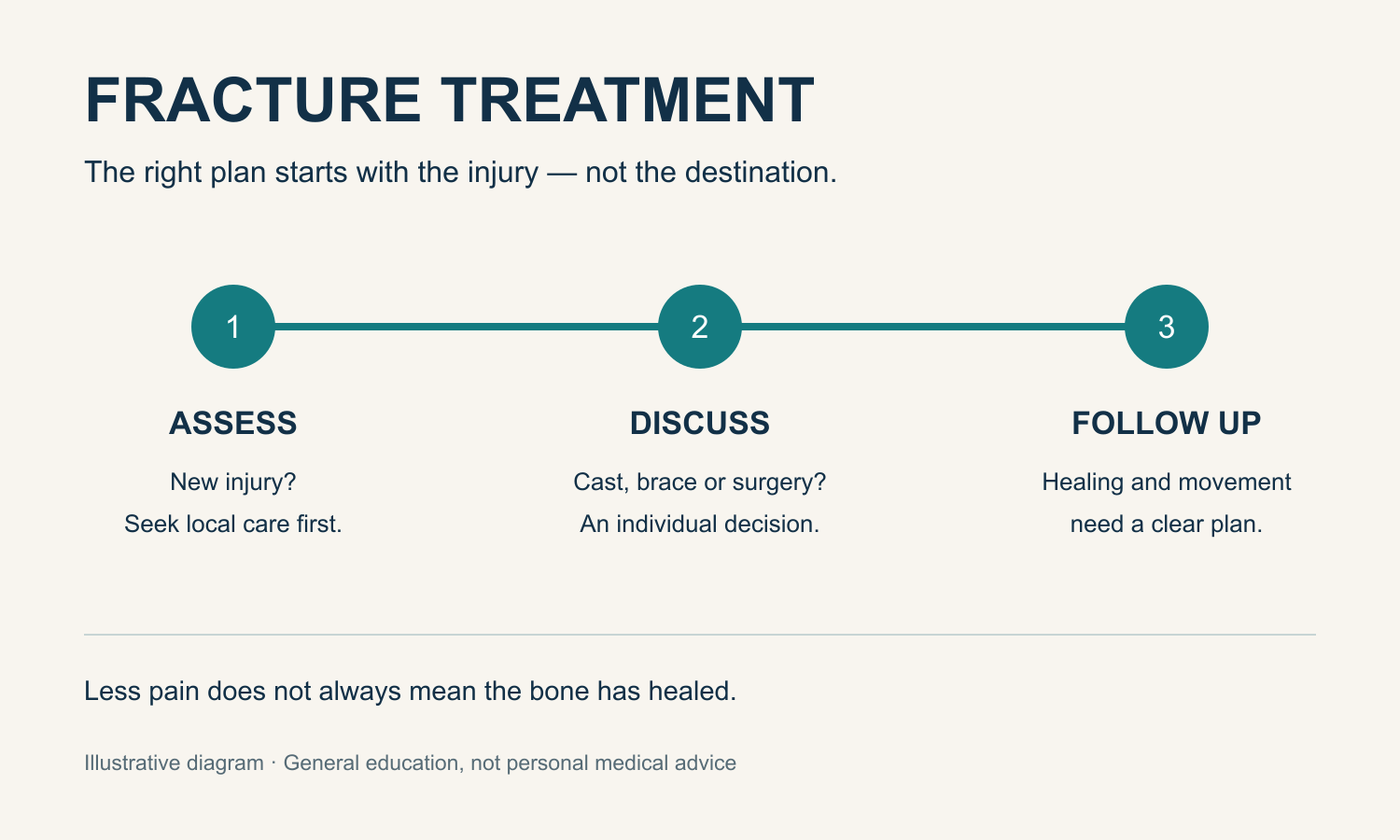
If you think you have broken an arm or wrist, get medical help promptly. Numbness, a limb at an unusual angle, a major colour change, heavy bleeding or exposed bone warrant emergency assessment. Do not wait for an overseas consultation or a WhatsApp reply.
This guide concerns informed discussion after immediate care has been arranged. It cannot diagnose a fracture from a description or photo.
Sources: [1]
What determines the treatment?
Fracture and broken bone mean the same thing. Breaks vary in location, alignment, stability and damage to surrounding tissues. Examination and usually X-rays help establish the injury.
Many fractures can be held in position with a cast; some need a brace or surgery. Surgical methods can include plates, screws, rods or an external frame. Ask why the proposed method fits your particular injury and whether another approach is reasonable.
Sources: [2]
What should you ask about surgery?
Ask what the operation aims to correct, what hardware may be used and how it will affect rehabilitation. Internal fixation carries risks including infection, failure to heal properly and implant breakage or deformation. No fixation technique guarantees uncomplicated healing.
Ask the surgeon to explain your individual risks and what would happen if healing is delayed. A second opinion should clarify the plan—not promise a better result without examining the evidence.
Sources: [3]
What does follow-up involve?
Healing time depends on the injury and your health. Pain may improve before the bone can safely tolerate normal activity. Ask when movement, loading and exercise are appropriate, and how progress will be assessed.
For an arm or wrist in a cast, seek urgent advice if pain worsens, the cast is damaged or too tight, fingers become numb or change colour, or there is discharge or a bad smell. Follow the treating team's cast-care and exercise instructions.
Can I arrange a review in Istanbul?
Once urgent care is addressed, ask your treating clinician whether travel is appropriate. Arrange continuity of care before making reservations: who checks healing, who manages the cast or wound, and who receives your records after you return home?
The hospital profile for Doç. Dr. Çağdaş Pamuk lists orthopaedics and traumatology at Private Silivri Anadolu Hospital and includes fracture treatment. His Unimed profile https://www.unimed.clinic/doctors/doc-dr-cagdas-pamuk provides a coordination starting point, not a guarantee of suitability or availability. He has not been represented as reviewing this article.
For non-emergency coordination, contact Unimed on WhatsApp +90 555 234 63 64: https://wa.me/905552346364. Confirm the specialist, hospital and written scope before travel. Use an agreed secure channel for reports.
Sources: [4]
Frequently asked questions
Does every fracture need an operation?
No. Treatment depends on the fracture; a cast or brace may be appropriate.
If pain has settled, can I stop protecting the bone?
Not without clinical advice. Pain can improve before the bone has regained sufficient strength.
Should I fly abroad with a suspected new fracture?
Arrange local assessment first. Travel decisions come after the injury and immediate care needs have been evaluated.
Is this personalised treatment advice?
No. This Unimed Editorial Team guide is educational. Your treating clinician determines the plan and follow-up.
References
General education, not an individual diagnosis or treatment recommendation. Suitability and treatment decisions require assessment by the treating clinician.
Have reports for this procedure?
Send them for a confidential specialist review. A coordinator confirms what is missing and when the doctor's view will be ready.