
Epilepsy surgery
Epilepsy Surgery in Istanbul: What Does an Assessment Involve?
Unimed Editorial Team · · 4 min read
Questions about epilepsy surgery assessment: seizure diagnosis, specialist testing, alternatives, individual risks and follow-up before travelling to Istanbul.
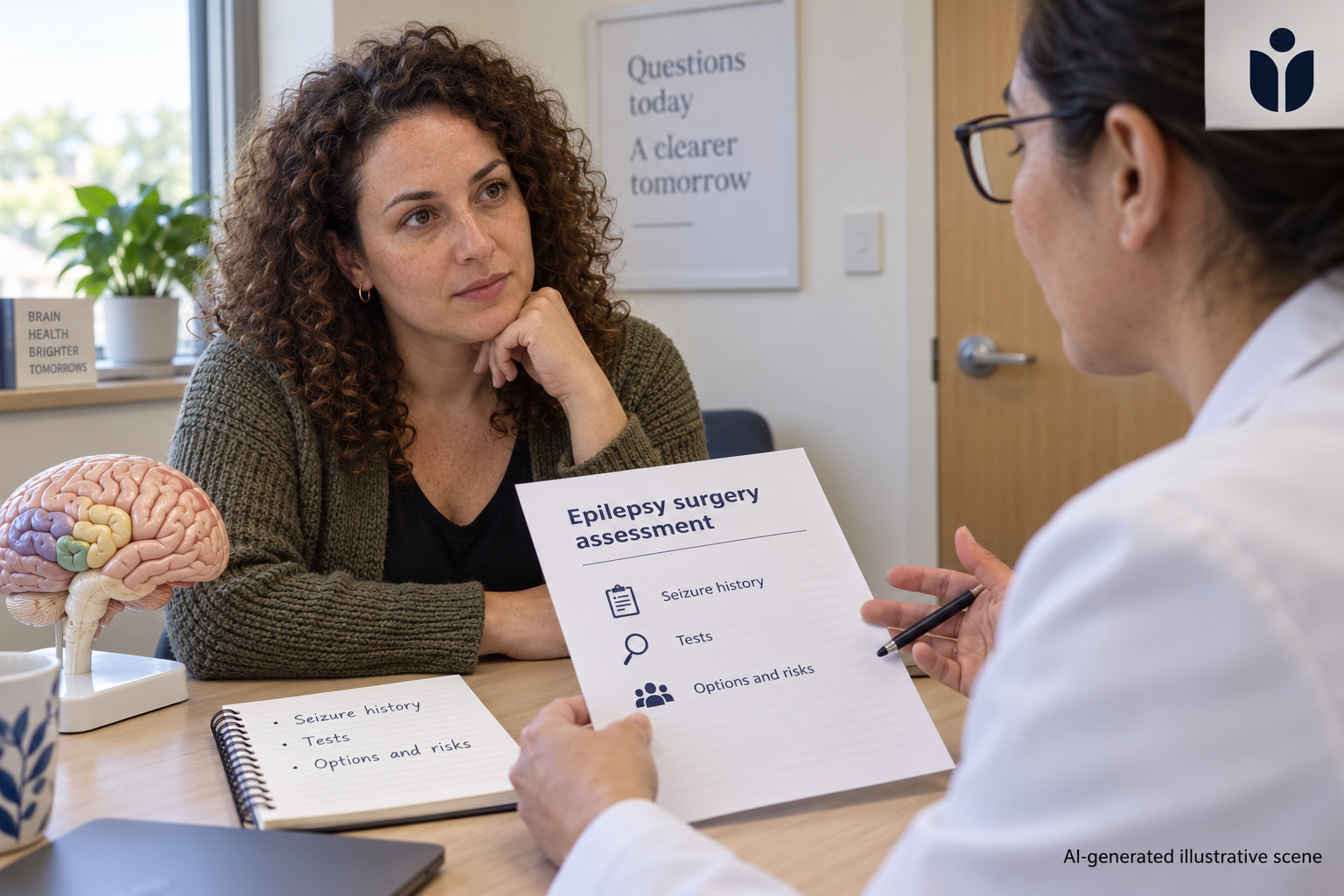
When is a surgical assessment worth discussing?
If seizures continue despite treatment, ask your neurologist whether a specialist epilepsy assessment is appropriate. First, the team needs to confirm the diagnosis and review the treatment history; not every episode of altered awareness is an epileptic seizure.
NICE recommends considering surgical assessment for drug-resistant epilepsy, including when MRI has not shown an abnormality. A referral opens a discussion about options: it does not establish that an operation will be suitable. NICE is UK guidance, not evidence of any individual Turkish provider's facilities or results.
What questions do the tests need to answer?
A useful assessment asks where seizures start, whether there is a treatable target and how treatment might affect important brain functions. Your seizure history and previous treatment records matter alongside scans.
Testing may include MRI, EEG or prolonged video-EEG monitoring. Thinking, language and memory assessments can help the team estimate risks. Selected people need additional imaging or invasive recordings; these are not routine requirements for everyone. Ask why each proposed test is needed and whether it involves a separate procedure or hospital stay.
Sources: [3]
Is epilepsy surgery one operation?
No. Some operations remove a carefully identified area where seizures originate. Other approaches may interrupt pathways or use targeted ablation. The choice depends on seizure type, location and the relationship to essential functions.
Ask the team to name the proposed procedure and its goal. Is the aim seizure freedom, fewer disabling seizures or another benefit? A technique described in an international guide is not automatically appropriate or available at the hospital you are considering.
Sources: [4]
What alternatives should be compared?
Medication remains central to epilepsy care. Ask whether your diagnosis, prescriptions, side effects and adherence need another review. Do not stop or change medication to prepare for a consultation unless your treating team instructs you.
Depending on the individual situation, alternatives may include specialist dietary therapy or neurostimulation. NICE describes vagus nerve stimulation as an additional option when resective surgery is unsuitable for drug-resistant seizures. A ketogenic diet for epilepsy requires specialist supervision; it is not a self-directed weight-loss diet.
Which risks deserve a personal explanation?
Surgery may not control seizures. Possible harms include bleeding, infection and changes in memory, thinking, mood or physical abilities. The risk depends on the target, procedure and individual health; some neurological problems can be lasting.
Ask how language, memory, vision and movement will be assessed and protected. Request a comparison with the risks of continuing seizures, not just a list of surgical risks. This guide offers no success percentage or individual outcome prediction.
What happens after treatment?
A successful operation does not mean medication can immediately be stopped. Continue the prescribed plan and discuss any future changes with the epilepsy team. Seizure monitoring and follow-up remain important.
Before travelling, request a written plan for wound review if relevant, medication supply, warning symptoms and follow-up near home. Ask who handles urgent concerns and how records reach your local clinician. Return-to-work, driving and fitness-to-fly decisions need individual advice; hospital discharge is not travel clearance.
How should I prepare for a consultation in Istanbul?
Prepare a timeline of seizures, previous tests and treatment changes. Ask which original MRI and EEG files the team needs, and use an agreed secure route for medical records. A short question list helps keep the appointment focused on your priorities.
Confirm the responsible epilepsy specialists, hospital, assessment stages and follow-up arrangements before booking flights. Ask whether the first visit is assessment only, how long testing may take and what a written quotation includes.
Op. Dr. Akın Gökçedağ's supplied profile lists epilepsy surgery as a focus area: https://www.unimed.clinic/doctors/op-dr-akin-gokcedag. This does not claim that he reviewed this article or offers every technique mentioned.
For non-emergency appointment coordination, contact Unimed on WhatsApp at +90 545 234 63 74: https://wa.me/905452346374. Unimed Editorial Team provides general educational information, not a diagnosis or personal treatment recommendation.
When should I seek urgent help instead of arranging travel?
Follow your individual seizure emergency plan. A first seizure, a seizure lasting longer than usual or over five minutes when the usual duration is unknown, or repeated seizures without usual recovery needs urgent local medical help. Do not wait for an overseas appointment or a coordination message.
Sources: [1]
Frequently asked questions
Does a normal MRI rule out a surgical assessment?
No. A specialist assessment may still be appropriate; MRI is only one part of the evaluation.
Will an assessment always lead to surgery?
No. It may recommend further tests, medication review, another treatment or no operation.
Can I stop medication once seizures improve?
Do not change or stop prescribed medication without your treating epilepsy team's advice, including after surgery.
Can seizure freedom be guaranteed?
No. Ask the specialist to explain realistic goals and uncertainties for your individual situation.
References
General education, not an individual diagnosis or treatment recommendation. Suitability and treatment decisions require assessment by the treating clinician.
Have reports for this procedure?
Send them for a confidential specialist review. A coordinator confirms what is missing and when the doctor's view will be ready.